Pull-Ups Aren’t Just for “Other” People:
Your Complete Guide to Mastering This Skill
Break Through Your Pull-Up Mental Block
If you’ve ever watched someone crank out a set of pull-ups and thought, “I could never do that…”—you’re not alone.
A lot of women believe that pull-ups are only possible if you’re:
- Naturally strong
- Extremely lean
- Someone who’s been training forever
But here’s the truth: while pull-ups do require strength, they are fundamentally a skill. And just like any other skill, they can be learned, practiced, and improved with the right approach.
This post will show you exactly how to go from “impossible” to “I did it!”
The Five Secrets to Better Pull-Ups
Secret #1: Practice Proper Body Position
Your body position will make or break your ability to do a pull-up. Learning the correct body position teaches you how to:
- Engage the right muscles
- Maintain full-body tension
- Control your core throughout the movement
Without proper body position, you’ll swing, arch, or lose tension when attempting pull-ups.
Try this: Practice hollow body holds and incorporate isometric core work into your training to improve body control and reduce “energy leaks.”
Secret #2: Build Your Grip Strength
You can’t pull yourself up if you can’t hold on. Weak grip is one of the most common limiting factors in women’s pull-up strength. A strong grip, on the other hand, is like a superpower!
Try this: Incorporate hollow hangs, bottoms-up kettlebell holds, or farmer’s carries into your training to strengthen your grip.
Secret #3: Use Bands Sparingly
Band-assisted pull-ups can be useful to some degree. But they tend to give the most assistance at the bottom of the movement, which is exactly where most people need to build strength. Use them occasionally if you find them helpful, but mix in some other progressions, too.
Try this: Focus on controlled eccentrics, partial reps, and other smart progressions (like Rack Pull-Ups or Box-Assisted Pull-Ups, which we’ll cover below!)
Secret #4: Use Variations That Support Core Control and Body Tension
To do pull-ups, you need to be able to maintain body tension and control over your core. Practice doing assisted pull-up variations that help you develop this skill.
Important note: The selectorized assisted pull-up machine doesn’t help you practice this tension, which is why we don’t recommend it as your primary tool.
Try this: Practice Alternating Passive to Hollow Hangs or Eccentric (Negative) Pull-Ups to develop body tension and core position.
Secret #5: Be Consistent
Like many skills, pull-ups reward consistency over time. Incorporate progressions into your training program, and stick with them!
Try this: Work on your pull-up progressions 2–3x per week with just a few focused exercises each session.
BONUS Secret: Eat Adequate Protein
Eating adequate protein supports muscle repair, growth, and strength—essential for building the upper-body strength and muscle needed to perform pull-ups effectively.
Try this: Aim for 0.7-1g of protein per pound of bodyweight daily to support your strength goals.
Reminder: If you struggle with pull-ups, it’s not that your body “can’t”—you just haven’t used the right progressions, given it the right stimulus, often enough, for long enough. That’s what this plan is for!
Your Step-by-Step Pull-Up Progression Plan
If you want to do a pull-up, training your back isn’t enough. You’ll need to build:
- Grip strength
- Core control
- Shoulder stability
- Pulling strength to get your chin over the bar
These are the exact exercises to help women go from “not yet” to “nailed it.”
Your Step-by-Step Pull-Up Progression Plan
Foundational Core & Grip Work
1. Supine Hollow Hold
-
- Strengthens your deep core and teaches you the ‘hollow’ position, crucial for maintaining proper body tension
- 3–4 sets of 2–3 reps with a 10–30 second hold per rep
2. Hollow Rockers
-
- Strengthens your deep core and teaches you how to maintain body tension while moving
- 3–4 sets of 6–12 reps
3. Bottoms-Up Kettlebell Hold
-
- Fires up your grip, shoulders, and core stability—all at once
- 3–4 sets of 10–30 seconds per side
4. Farmer’s Carry
-
- Strengthens your grip, forearms, arms, shoulders, back, and core
- 3–4 sets of 16–20 steps
Hanging Strength & Shoulder Control
1. Alternating Passive to Hollow Hangs
-
- Trains grip endurance and shoulder stability in the pull-up position
- 3–4 sets of 10–30 seconds
2. Hollow Hangs
-
- Trains grip endurance and shoulder stability in the pull-up position
- 3–4 sets of 2–3 reps with a 10–20 second hold per rep
3. Scapular Pull-Ups
-
- Teaches you how to initiate the movement from your shoulders and lats
- 3–4 sets of 6–10 reps
4. Pull-Up Iso Hold
-
- Trains top-end strength and scapular stability
- 3–4 sets of 10–30 seconds
Upper Body Strength
1. Inverted Rows
-
- Strengthens your upper back, arms, grip, and core
- 3–4 sets of 6–10 reps
2. Eccentric (Negative) Pull-Ups
-
- Builds strength through the full range of motion—especially the hardest part
- 3–4 sets of 3–6 reps, lower slowly for 3–5 seconds
3. Rack Pull-Ups
-
- Builds vertical pulling strength while forcing you to engage your core
- 3–4 sets of 8–10 reps
4. Box-Assisted Pull-Ups
-
- Builds vertical pulling strength and helps pattern the pull-up movement
- 3–4 sets of 8–10 reps
How to Use This Plan
- Choose 1 exercise from each category/column above per session
- Do them 2–3x per week
- Rest 1–3 minutes between sets
- Track your progress!
Advanced Progressions
Once you’re getting stronger, mix in one or two of these variations:
- Top-Half Pull-Ups: 3–4 sets of 3–6 reps
- Partial Reps from a Box: 3–4 sets of 3–6 reps
- Flexed-Arm Hang: 3–4 sets of 10–20 seconds
These help bridge the gap between drills and your first full pull-up.
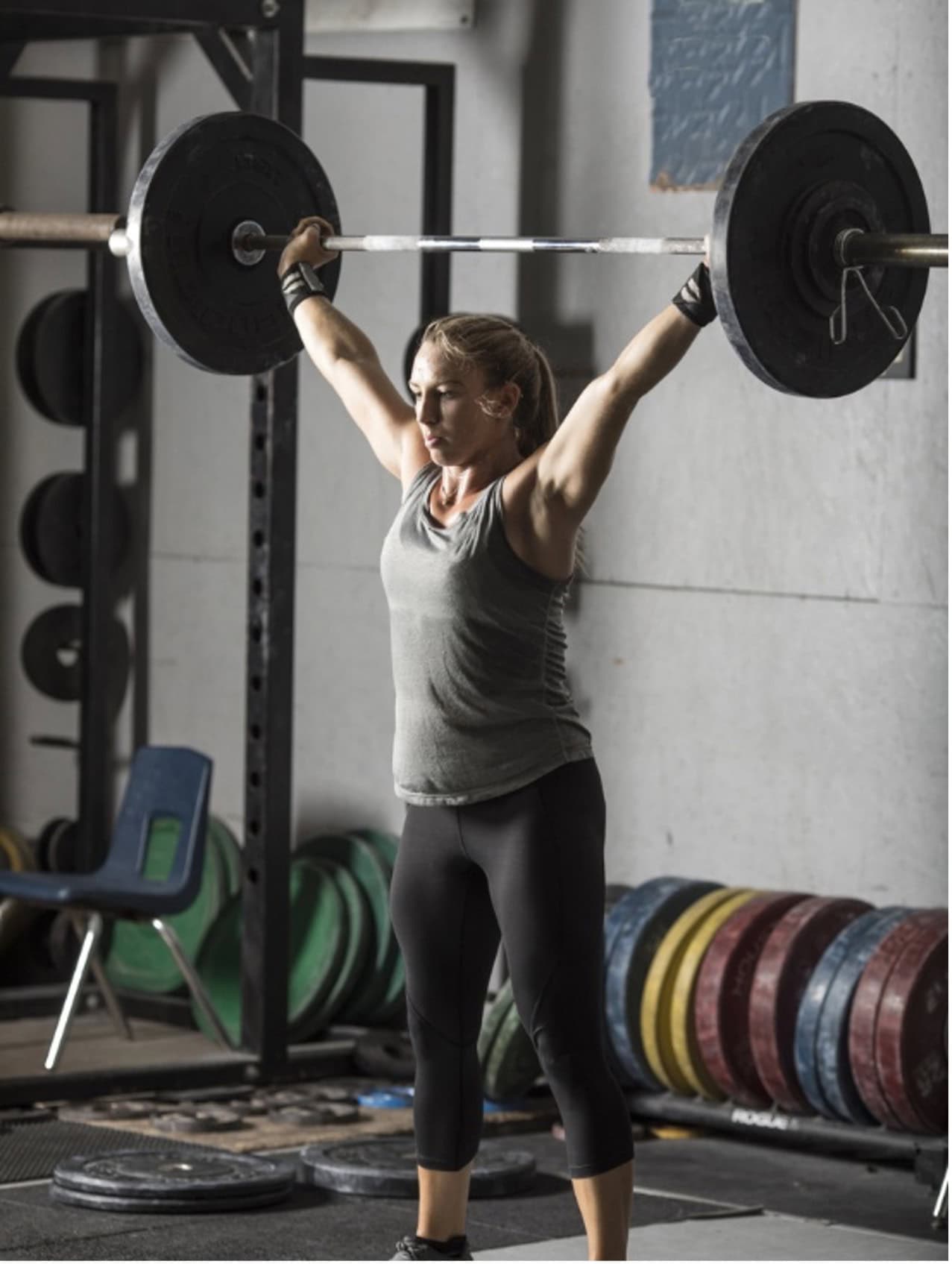
How to Keep Moving Forward
Pull-ups are one of the most empowering strength milestones out there, but they don’t happen overnight.
The good news? Every single rep, hang, and hold moves you closer.
Mindset First
- Start where you are—not where you think you “should” be
- Measure progress in multiple ways—longer hangs, smoother reps, stronger grip, better form, etc.
- Remember: Progress is rarely linear. One “bad” day doesn’t erase all your work. Keep going!
Make It a Habit
- Incorporate these exercises 2–3 times per week
- Do your pull-up drills at the start of your workout, when you’re freshest
- Keep it short and simple—choose one exercise from each category
Progress Over Time
- Gradually reduce assistance (e.g., lighter bands, lower box)
- Add reps or time when the work starts to feel easy
- Mix in new variations (like weighted negatives or pauses at the top) once you’re nailing bodyweight reps
Celebrate the Wins
Got your first hollow hang? Held a negative longer than before? Used a lighter band?
Give yourself a pat on the back for any and all improvements.
Keep showing up, stay consistent, and trust the process. You’ve got this!